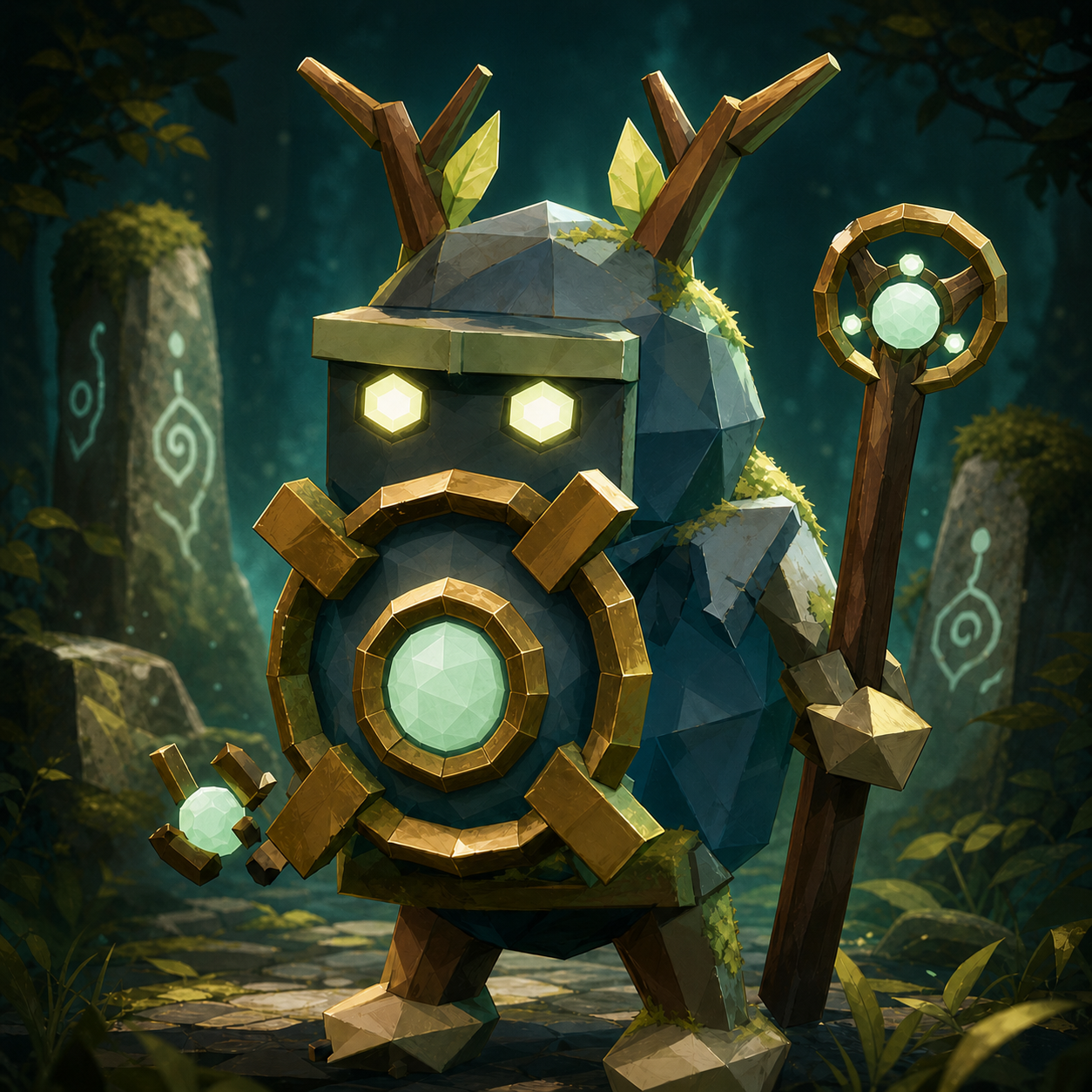
 Unofficial concept
Support · route control
Unofficial concept
Support · route control
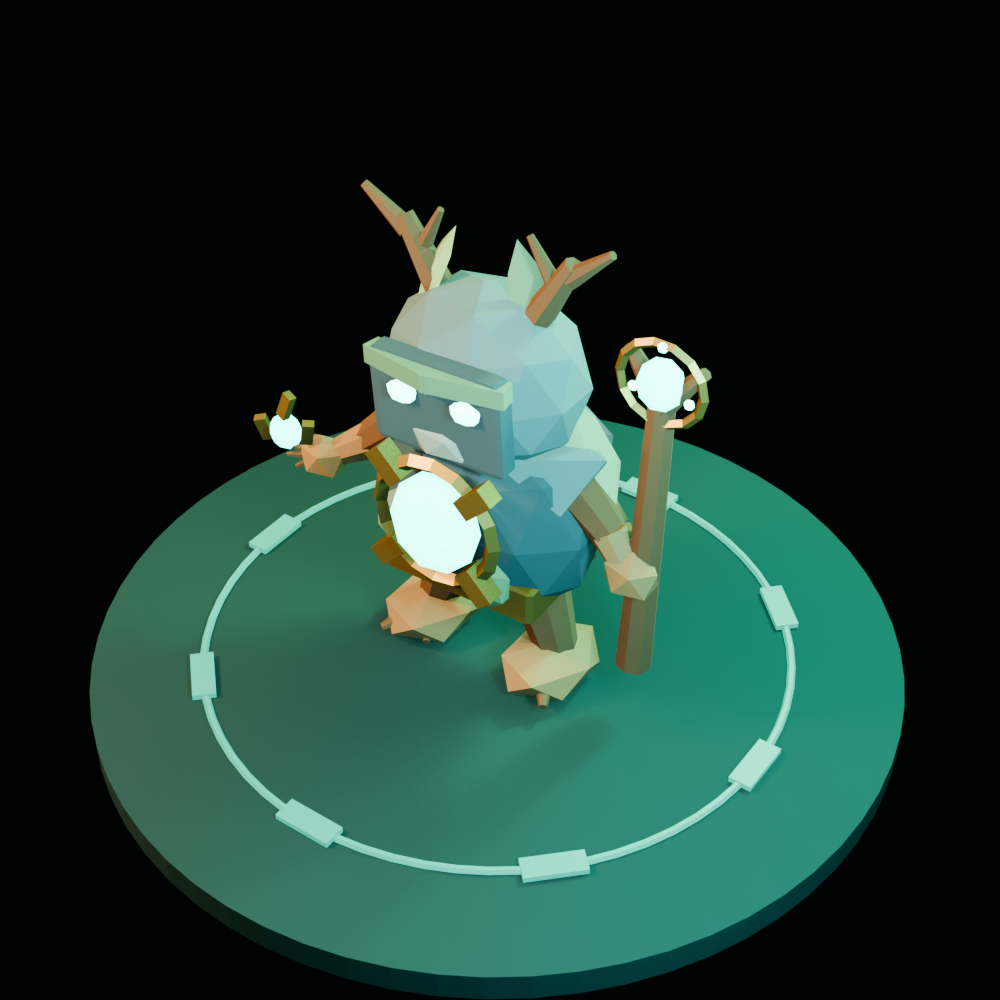
The WaywardenGlimmerrootWorking theme · Grove
Unofficial concept
Support · route control

A finished character pitch you can understand in under a minute: expressive tile art, a playable hex-board movement mechanic, and a complete downloadable handoff for Connor.
Concept mockup—not an official build. No Spell Valley logo, interface art, character assets, or private production files were used.
Drag the suggested piece onto a glowing legal hex—or tap the piece and destination. The board accepts only the move the current rules allow.
Drag this marker onto the glowing hex.
Reference Ranger and Skeleton portraits are cropped from the user-supplied Spell Valley gameplay screenshot and appear only in this unofficial browser mockup—not in the downloadable concept pack.
The primary handoff is tile-first. The Blender files remain useful as a character-design source and bonus production artifact.
The delivered alpha crops are shown at their actual pixel dimensions. The prototype circle can be replaced with Connor’s real UI mask.

Official store materials show portrait-driven hero tiles on a hex-shaped tactical map, fast turn-based battles, and a roster of 35+ heroes. The demo now matches that interaction grammar with contained unit cards and correct hex spacing; two small reference portraits come from the gameplay screenshot supplied for this review.
Visible in official store screenshots and the supplied gameplay references.
Every unit stays inside one discrete cell; resize-aware geometry preserves the hex grid.
Move range, blockers, objectives, and real UI safe areas.
The listings pitch roughly five-minute matches.
Place, contest, consume. No hidden proc or nested status stack.
Cost, cooldown, line of sight, and turn boundary.
Distinct reads matter in a crowded collection.
Antler crown, bright eyes, and waylight remain legible at 64 px.
Whether a live hero already owns this tactical niche.
Recent public release notes foreground darker swamp characters.
Mint waylight and old-road lore offer a different visual temperature.
Theme cadence and any unreleased Grove plans.
Evidence key: public statements above come from the official Google Play listing and official App Store listing. The Ranger and Skeleton reference portraits were cropped from the user-supplied gameplay screenshot for this mockup only. The character, role, demo rules, and board composition are proposals.
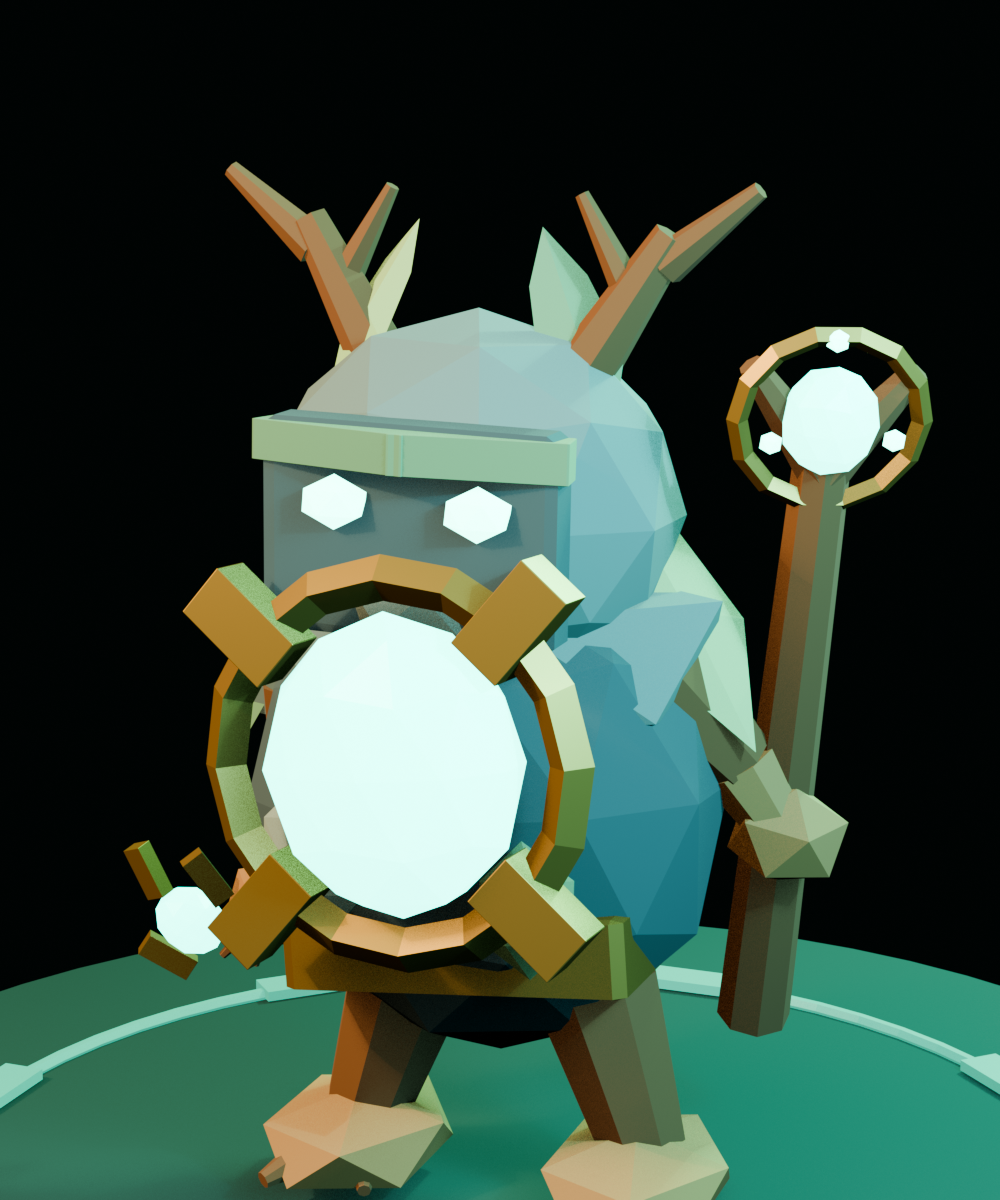
Blender provides an orbitable character bible, repeatable poses, and verified interchange files. It is the design source—not the proposed battlefield format.
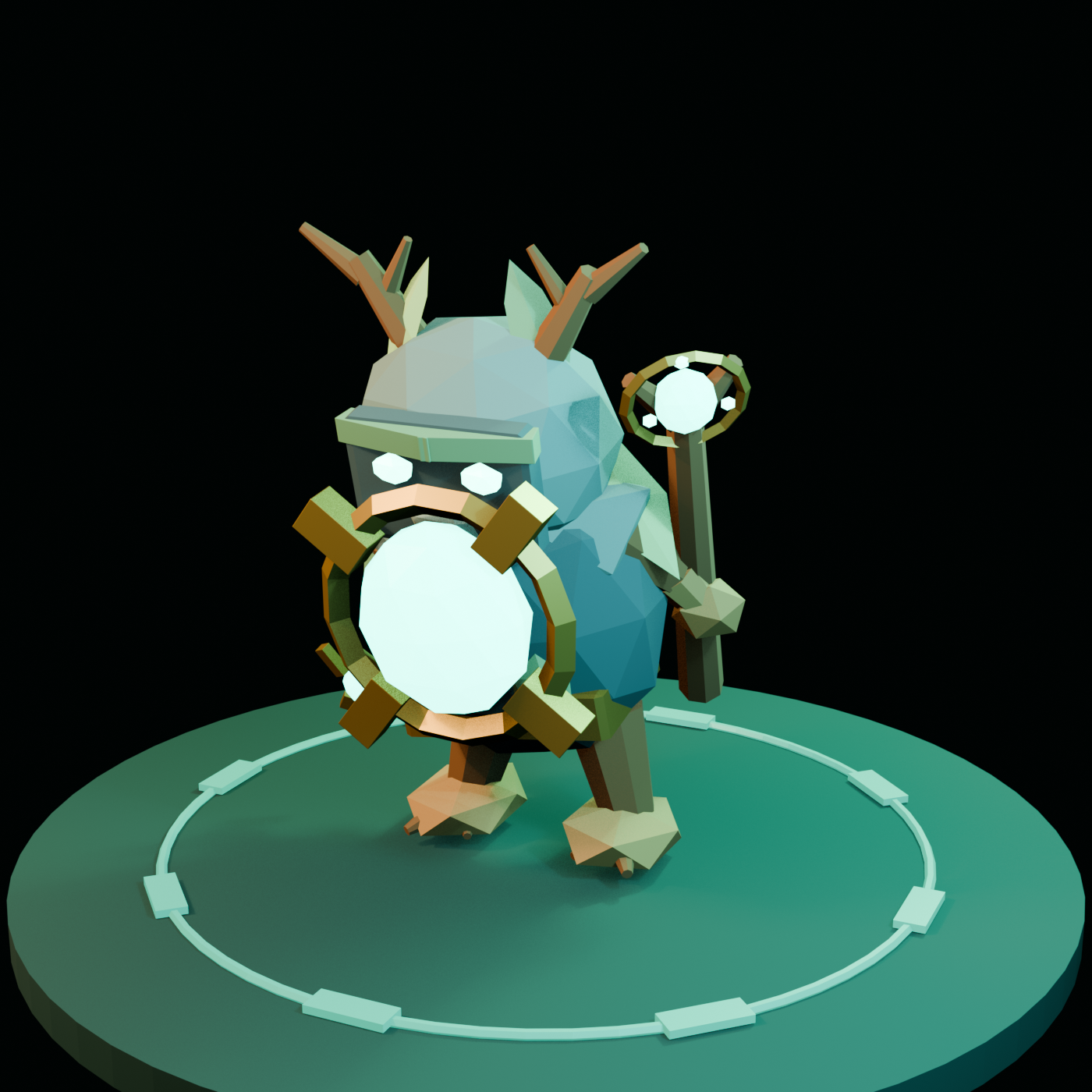 Loading interactive source…
Drag to orbit · scroll to zoom
Locks silhouette, materials, pose, and lighting.
Preserves the crown, core, staff, and waylight seed.
Face and chest remain identifiable down to 64 px.
The same motif becomes a contested marker on a real hex graph.
This factual audit trail excludes credentials, private system instructions, hidden reasoning, and raw server logs.
The independent passes set quality bars for originality, real assets, game fit, legal-move clarity, enemy counterplay, accessibility, and VPS isolation.
Reviewed official store copy, release notes, and screenshots. Public evidence now sits after the playable and downloadable work instead of interrupting the pitch.
Used the normal Blender 5.2 LTS application in background mode to create geometry, materials, a 9-bone rig, three animations, renders, BLEND, GLB, and FBX files.
Created a painterly portrait from the project’s own Blender reference, refined its small-size focal hierarchy, and exported five masked tile sizes plus a Waylight marker.
Defined placement, duration, ally trigger, enemy denial, expiry, stacking, and edge-case guardrails while leaving private balance variables explicit.
Added a 19-cell axial hex model, computed legal targets, drag/touch/tap/keyboard input, invalid-move feedback, a reach meter, ally success, enemy denial, replay, and complete scenario resets.
Replaced compressed percentage spacing with resize-aware flat-top axial coordinates, contained each portrait inside a unit card, added real-game reference portraits, and moved the next-action cue directly above the board.
Clean-imported both 3D formats, checked the package and browser interactions, then updated only this VPS subdirectory without changing the existing homepage or server configuration.
Five project prompts are reproduced verbatim below. Platform metadata, system/developer instructions, secrets, and private reasoning are intentionally not published.
I have a friend Connor who works on the mobile game spell valley.
Can you download blender make a 3d model of a new character he could add to the game then make a new page on my hetzner VPS then send the link to me?
On the page you should note all of the prompts i gave you and what work you did in a clear way.
Ideally, this is the only prompt needed so when in doubt dispatch a subagent to review the original task and what sticking points you have and what might get you unstuck
This is great, now let's assume that this is the first version of me helping someone onboard to using ai productivity and we really want to wow them both with the 3d model and with the work done. Do another review pass with a critical eye and clean this up note details about how this relates to spell valley as it is today and what else we might be able to do to improve this. Ideally come back with something even better with an even more impressive wow factor. I would probably vote for iteration on this rather than making something new. As an aside, I am surprised to have not watched you do this work in blender. Are you working in a headless version or something? Don't change anything, I'm just curious.
Oh and lol spell valley doesn't have 3d models of characters they have tiles. So we can keep the character model here, but Ideally we instead of artwork on a tile and walk out the mechanic.
We should make this playable in the browser rather than clicking through the tabs. Make it so you can only do the things suggested with queues to the user so they understand, and maybe leave the tabs to reset things, but I wanted to drag and drop things as you do in the actual game in the demo. This also makes the impact of the enemy less clear because I can't test it. Also the board if you look at it is a hexagonal board. We should leverage that in this demo so it really looks and feels like the actual game.
So in summary. 1. Redo the demo portion so it feels playable. 2. Re-order the pieces so it shows the art and useful bit up front, followed by the work delivered, then go into details that aren't relevant etc later. So we should start with attention grabbing executive summary and flashy marketing work and then go deeper into still explicitly useful details as we go.
I would put the art work and mechanic demo above **Grounded in the public game, explicit about the gaps etc**
this is what the game looks like why are the tiles overlapping? It isn't clear what you are supposed to do at any stage of the demo. The attacker or enemy should be tiles from the game ideally. Feel free to search online to pull those assets.